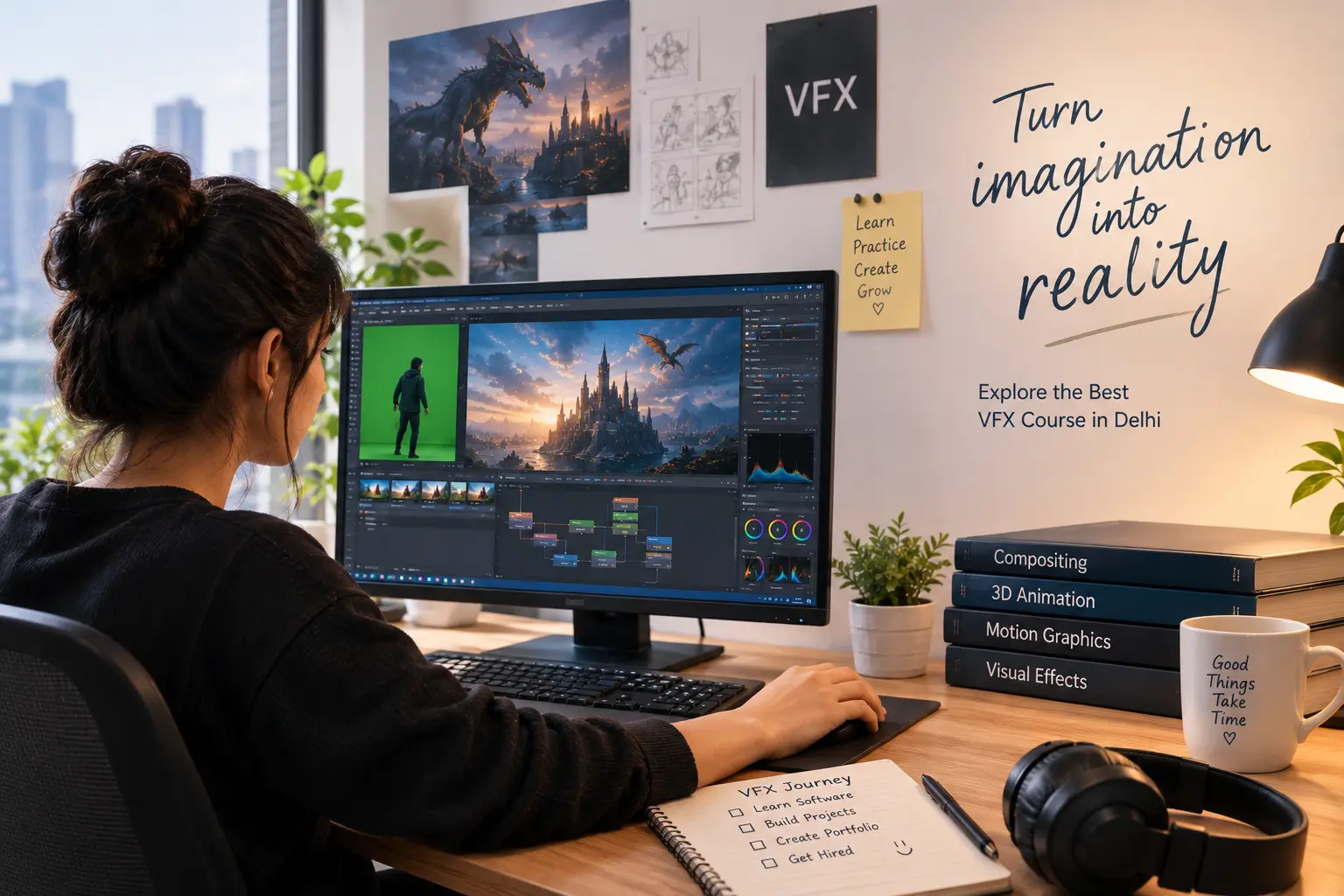
How to Choose the Best VFX Course in Delhi
The visual effects industry has become an exciting career option for students interested in films, animation, gaming, advertising, and digital content creation. If you want to enter this creative field, enrolling in the right VFX Course in Delhi can help you develop the technical knowledge and practical skills needed to get started. However, with so many institutes and training programmes available, choosing the right one can be challenging. Understanding what to look for in a course will help you make an informed decision based on your interests, budget, and career goals.
Why Is Choosing the Right VFX Course in Delhi Important?
Visual effects, commonly known as VFX, involves creating or enhancing images that cannot easily be captured through traditional filming techniques. It is widely used in movies, television shows, advertisements, video games, and digital content.
Learning VFX requires more than knowing how to operate software. You also need creativity, attention to detail, problem-solving abilities, and an understanding of how different visual elements work together.
A suitable training programme can help you develop these skills through structured lessons and practical assignments. It can also introduce you to professional workflows and help you understand the expectations of the industry.
Delhi offers various options for students interested in creative and technical training. Comparing institutes carefully can help you identify a course that matches your learning requirements and long-term goals.
7 Factors to Consider Before Enrolling in a VFX Course
Before selecting an institute, evaluate the following factors to understand whether its programme offers the right balance of knowledge, practical experience, and career preparation.
1. Check the Course Curriculum
The curriculum is one of the first things you should examine. A well-structured programme should begin with the fundamentals and gradually introduce more advanced concepts.
Look for subjects such as:
- Compositing and green-screen removal
- Rotoscoping and paint techniques
- Motion tracking and matchmoving
- 3D modelling and texturing
- Lighting and rendering
- Colour correction and visual integration
The exact subjects may differ depending on the course level and specialisation. Ask the institute for a detailed syllabus before enrolling.
2. Evaluate the Faculty and Teaching Methods
Experienced instructors can make a significant difference to your learning experience. They can explain complex concepts, demonstrate practical workflows, and help you understand common mistakes that beginners make.
Before joining a course, research the instructors’ backgrounds and relevant industry or teaching experience. You can also ask how assignments are assessed and whether students receive individual feedback.
A good learning environment should encourage questions, experimentation, and creative problem-solving rather than focusing entirely on theoretical explanations.
3. Look for Practical Training
VFX is a skill-based field, so practical experience is essential. Watching demonstrations can help you understand a technique, but applying it yourself is what develops confidence.
When comparing institutes, check how much time is dedicated to practical assignments and project work.
Students should ideally get opportunities to practise green-screen compositing, motion tracking, object removal, and other techniques relevant to their chosen specialisation.
Ask whether you will complete individual projects and receive feedback on your work. These assignments can help you recognise your strengths and identify areas that need improvement.
4. Check the Software and Technical Facilities
Professional visual effects workflows use specialised software for compositing, 3D production, tracking, and animation.
Depending on the programme, you may learn tools such as Autodesk Maya, Blender, Nuke, or Adobe After Effects.
You do not need to master every application at once. Instead, focus on whether the software taught is relevant to your career interests.
Ask about computer facilities, software access, lab hours, and opportunities to practise outside classroom sessions. Learning how to apply software tools to actual projects is more valuable than simply memorising commands.
5. Compare Course Fees and Duration
Course fees and duration can vary according to the syllabus, training level, facilities, and teaching methods.
Before making a decision, compare the total cost of different programmes. Check whether registration fees, software access, study materials, examinations, and other charges are included.
A higher fee does not automatically mean better training, just as a lower fee does not necessarily indicate poor quality.
Consider the overall value offered by the institute, including practical exposure, instructor support, curriculum quality, and the time available for practice.
6. Review Student Portfolios
Student portfolios provide useful insights into the practical outcomes of a training programme.
Ask to see examples of previous student projects, particularly those related to the skills you want to learn. Look for clean compositing, accurate motion tracking, realistic lighting, and well-integrated digital elements where relevant.
A portfolio is important because employers often want evidence of what a candidate can create, rather than relying solely on certificates.
Find out whether the institute helps students build a portfolio during the course. Having a selection of well-presented projects can make it easier to demonstrate your abilities when applying for internships or entry-level positions.
7. Understand Placement Assistance When Choosing a VFX Course in Delhi
Career support is another factor worth considering when choosing a VFX Course in Delhi.
Some institutes provide interview preparation, portfolio reviews, internship assistance, or connections with employers. However, the services offered can differ significantly.
Ask what placement assistance actually includes and whether it is covered by the course fee. If an institute advertises placement statistics, request details about the figures and the outcomes for students enrolled in the particular programme.
Be cautious about guaranteed-job promises. Completing a course does not automatically guarantee employment. Your technical skills, portfolio, communication, and interview performance also influence your opportunities.
Which VFX Course in Delhi Is Best for Beginners?
If you have no previous experience, a beginner-friendly programme is usually a sensible starting point. Look for a course that introduces the fundamentals, explains essential software tools, and gradually moves towards practical assignments.
Your interests can help you decide which subjects deserve more attention.
For example, students interested in film and television may want to explore compositing, rotoscoping, and matchmoving. Those interested in creating digital objects may prefer a programme with greater emphasis on 3D modelling, texturing, lighting, and rendering.
If you have not decided on a specialisation, consider a foundational course that introduces multiple areas of visual effects before moving into advanced training.
Career Opportunities After Completing a VFX Course in Delhi
After developing the necessary skills, students can explore several entry-level roles in the visual effects industry.
Some potential career paths include:
- Compositing Artist: Combines multiple visual elements into a finished shot.
- Rotoscoping Artist: Isolates people or objects from video footage.
- Matchmove Artist: Tracks camera movement to integrate digital elements accurately.
- VFX Paint Artist: Removes unwanted objects and cleans up footage.
- 3D Artist: Creates digital models, textures, lighting, and rendered assets.
Opportunities may be available in post-production studios, film and television production, advertising agencies, gaming companies, and digital media businesses.
Career progression depends on your technical abilities, chosen specialisation, experience, and portfolio. Consistent practice and continued learning can help you improve your skills over time.
Final Checklist Before Enrolling
Before making your final decision, review these essential points:
- Does the curriculum match your career interests?
- Are the instructors experienced and approachable?
- Does the programme include practical assignments?
- Will you have access to relevant software and equipment?
- Can you build a portfolio during the course?
- Are the fees and duration clearly explained?
- Is career support described transparently?
Comparing these factors will help you assess different institutes more objectively and avoid choosing a programme based only on promotional claims.
Conclusion: How to Choose the Best VFX Course in Delhi
Choosing the right VFX Course in Delhi involves evaluating the curriculum, faculty, practical training, software exposure, portfolio development, and career support offered by an institute.
Take time to research your options, compare course structures, review student projects, and understand the complete fee structure before enrolling. Most importantly, choose a programme that aligns with your interests and gives you sufficient opportunities to practise.
A career in visual effects requires creativity, patience, technical understanding, and continuous improvement. The right training can provide a strong foundation, while your dedication to developing practical skills will help you progress towards your career goals.
Recommended services: